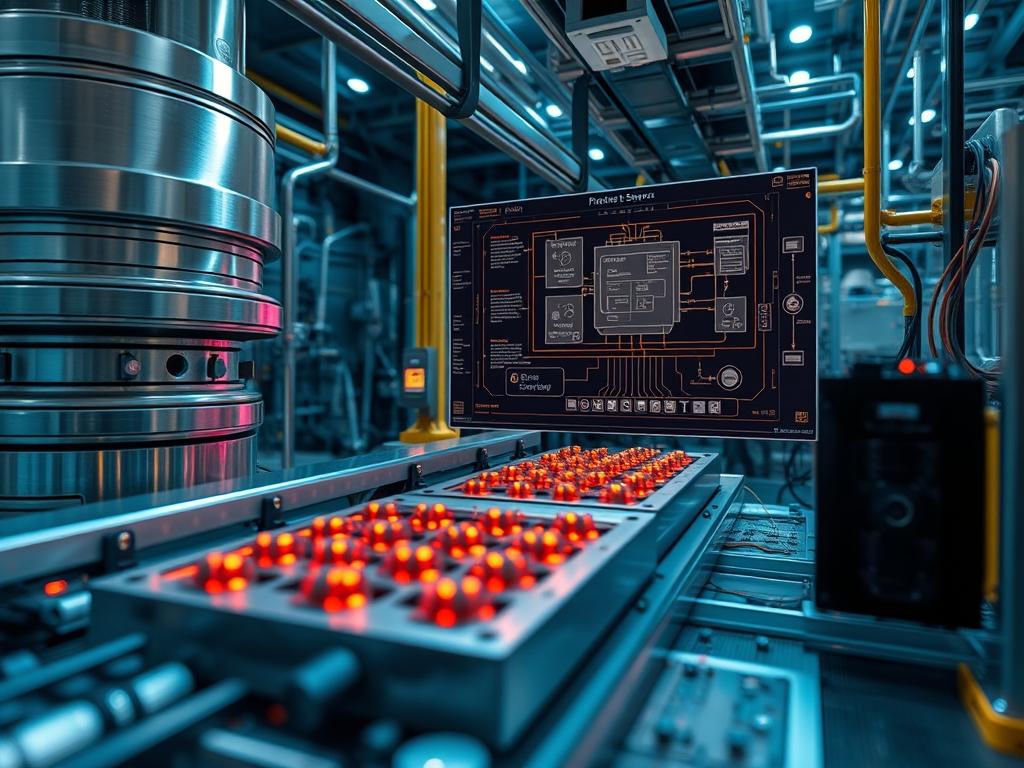
Mitigating Aluminum Current Collector Corrosion in High Voltage Cells
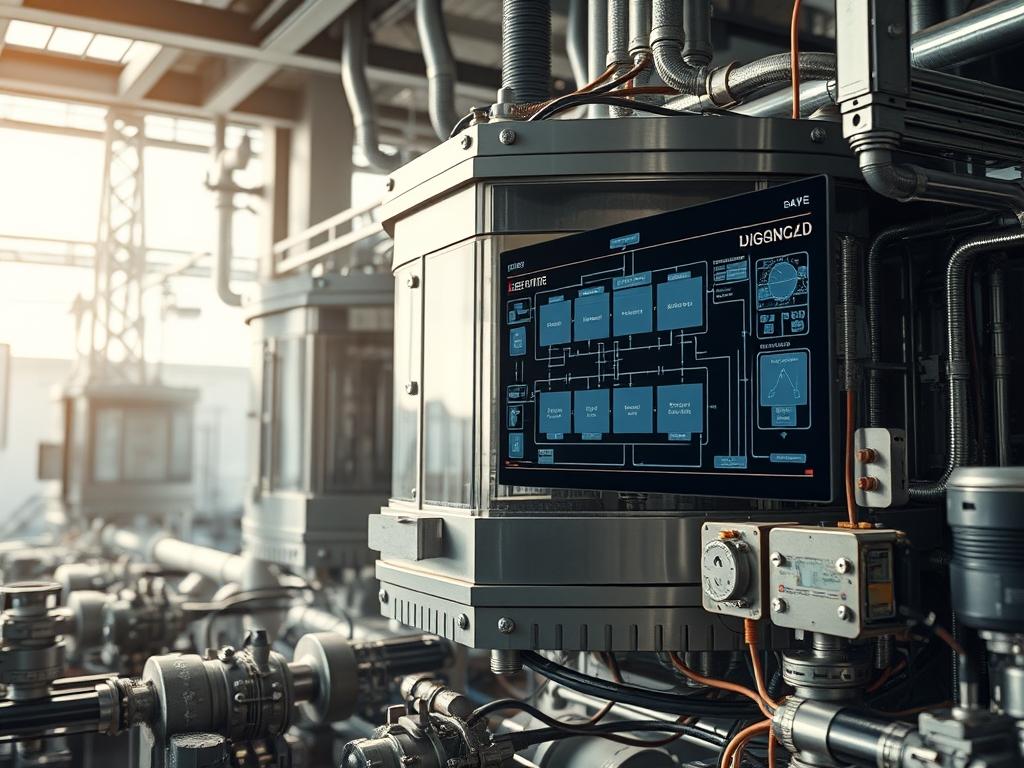
Aluminum Current Collector Corrosion

Aluminum Current Collector Corrosion represents a critical failure vector within high voltage energy storage systems and industrial battery infrastructure. As grid scale energy mandates increase the demand for high voltage architectures; often exceeding 800V strings; the electrochemical stability of the metallic components becomes paramount. The aluminum current collector serves as the primary substrate for the … Read more


Improving Adhesion through Copper Foil Surface Treatment

Copper Foil Surface Treatment

Copper Foil Surface Treatment constitutes the foundational physical layer within advanced high-performance electronic hardware and energy storage infrastructure. This process addresses the inherent interface rejection between non-polar dielectric substrates and conductive metallic foils. Without effective treatment, the technical stack suffers from delamination; this manifests as catastrophic mechanical failure or excessive signal-attenuation in high-frequency data environments. … Read more

Accommodating Volume Changes in Nano Silicon Anode Expansion

Nano Silicon Anode Expansion

Nano Silicon Anode Expansion represents the primary technical hurdle in advancing energy storage throughput beyond legacy graphitic limits. While silicon offers a theoretical gravimetric capacity of approximately 4200 mAh/g, its implementation introduces a significant mechanical overhead: the material expands by nearly 300 percent during lithiation. This volumetric strain leads to particle pulverization and the continuous … Read more

Evaluating the Non Flammable Nature of Ionic Liquid Electrolytes

Ionic Liquid Electrolytes

Ionic Liquid Electrolytes represent a critical shift in the safety architecture of next-generation energy storage systems; particularly within high-density data centers and mission-critical network infrastructure. Traditional lithium-ion batteries rely on volatile organic carbonates that pose significant fire risks due to their low flash points and high vapor pressures. In contrast; Ionic Liquid Electrolytes are composed … Read more

Integrating Cell Level Pressure Sensors for Early Fault Warning

Cell Level Pressure Sensors

Integration of Cell Level Pressure Sensors represents the most granular approach to failure mitigation in high-density lithium-ion energy storage systems. While traditional Battery Management Systems (BMS) rely on voltage and temperature monitoring to detect anomalies, these metrics often suffer from high thermal-inertia; meaning a significant internal chemical event must occur before a measurable heat signature … Read more

Electrochemical Indicators for Lithium Plating Detection

Lithium Plating Detection

Lithium Plating Detection (LPD) represents a critical safety and diagnostic stratum within high-density Energy Storage Systems (ESS) and electric vehicle powertrains. This process involves identifying the formation of metallic lithium on the surface of the anode during charging; an event that occurs when the electrochemical potential of the anode drops below 0V vs. Li/Li+. Within … Read more

Detecting and Preventing Microcrack Formation in Cathodes

Microcrack Formation in Cathodes

Microcrack formation in cathodes represents a primary failure mechanism in high density lithium ion battery systems. It manifests as mechanical degradation within the crystalline structure of active material particles; specifically during the lithiation and delithiation phases associated with standard charge cycles. In mission critical energy infrastructure, these cracks facilitate electrolyte penetration into the particle core, … Read more

Cell Level Cooling through Phase Change Material Integration

Phase Change Material Integration

Phase Change Material Integration represents a critical advancement in thermal management for high-density energy storage and compute environments. This methodology utilizes the latent heat of fusion to regulate temperatures at the modular or cell level; effectively decoupling the thermal-inertia of the system from the immediate ambient environment. In traditional air or liquid cooling; heat removal … Read more

Structural Fatigue Challenges in Nickel Rich Layered Oxides

Nickel Rich Layered Oxides

Nickel Rich Layered Oxides represent the critical storage layer in the modern energy infrastructure stack; they provide the high energy density required for long range electric vehicles and grid scale load leveling. As nickel content increases beyond 60 percent, the material experiences significant structural fatigue due to anisotropic volume change during delithiation. This degradation manifests … Read more

Optimizing Charge Storage with Hard Carbon Anodes for Sodium

Hard Carbon Anodes for Sodium

Hard carbon architectures represent the primary structural host for sodium-ion charge carriers within next-generation stationary storage and grid-scale infrastructure. While graphite dominates the lithium-ion landscape, its inter-layer spacing is insufficient for the larger ionic radius of sodium. Hard Carbon Anodes for Sodium address this metabolic constraint by utilizing non-graphitizable, disordered carbon layers that providing a … Read more